
You Don’t Need to Rebuild Your Audience. Phresh Isn’t About Having One.
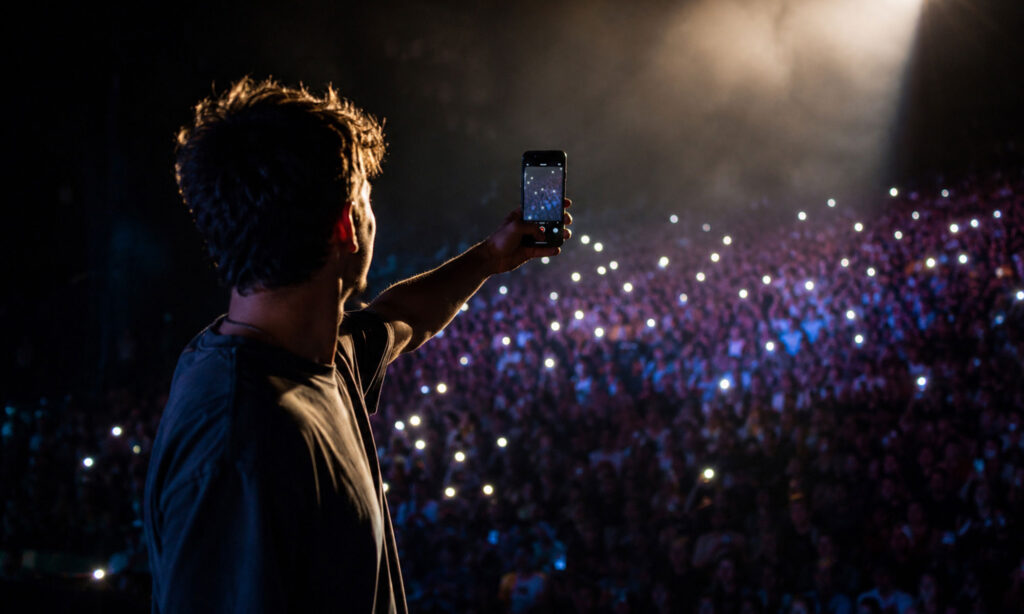
What if the reason people won’t leave social media isn’t because they love social media – but because they don’t want to leave their audience behind?
It’s something we’ve been thinking about a lot while building Phresh.
People say they’re tired of social media. They’re tired of algorithms, endless scrolling, performative posts, attention-seeking, outrage, and the pressure to constantly show everyone what they’re doing.
But then there’s the other side nobody really talks about.
After years on Instagram, TikTok, Facebook, YouTube, or X, people have built something there. An audience.
Maybe it’s 200 followers. Maybe it’s 2,000. Maybe it’s 200,000. Whatever the number, starting over somewhere else can feel like throwing all of that away. And we get it.
Somewhere Along the Way, We All Got an Audience
This isn’t exactly a new phenomenon.
More than 15 years ago, researchers Alice Marwick and Danah Boyd were already studying how social media was changing the relationship between ordinary people and their audiences. Their research explored concepts including micro-celebrity, personal branding, self-presentation, and the “imagined audience.”
In their 2011 paper I Tweet Honestly, I Tweet Passionately, Marwick and Boyd found that social media users had to imagine who was listening when communicating online. Some of the techniques people used to manage those audiences resembled micro-celebrity and personal branding – essentially treating the presentation of yourself online more strategically.¹
Another study by the same researchers, To See and Be Seen: Celebrity Practice on Twitter, examined how celebrity itself could be understood as a set of online practices involving performance, followers, perceived intimacy, and self-presentation.²
And remember: this research was happening before Instagram had become what it is today, before TikTok existed, and before “influencer” became an everyday career choice.
Social media eventually put numbers next to all of it.
- Followers.
- Likes.
- Views.
- Shares.
- Comments.
Suddenly, being social online wasn’t just about talking to people anymore. There was a scoreboard attached.
And after years of watching those numbers grow, it’s understandable that people don’t necessarily want to give them up.
Someone can genuinely think: “Social media is exhausting.”
While also thinking: “But I worked hard to build my following.”
Both can be true.
So We’re Not Asking You to Give It Up
This is where we realized something important about Phresh.
We don’t need to replace your audience. Because Phresh isn’t supposed to be about having one.
Keep Instagram. Keep TikTok. Keep YouTube. Post the vacation photos. Share your work. Make videos. Build your following. Go viral if that’s your thing.
Phresh is meant for something different. It’s for the people behind all of that. Your actual Krew (your small circle).
Think about it this way:
Instagram is where you post the perfect beach photo.
Phresh is where you tell six friends you dropped your phone in the hotel toilet five minutes before taking it.
One is for the audience. The other is for your people. And there’s room for both.
Because We Act Differently When Everyone Is Watching
There’s research behind this idea, too.
Marwick and Boyd studied something called context collapse – what happens when different audiences that would normally exist separately suddenly occupy the same online space.¹
Think about who’s potentially watching you on a typical social platform:
- Your friends.
- Your family.
- Your coworkers.
- Your boss.
- People from high school you haven’t spoken to in 15 years.
- Someone you met once at a party.
And somehow you’re supposed to make one post for all of them. Naturally, we start thinking differently about what we say, what we share, and how we present ourselves.
More recent research supports another interesting piece of this.
A 2024 study examining the imagined audience on social media found a significant relationship between how close people felt to the audience they imagined and how intimately they disclosed things on Instagram. When people imagined an audience they felt closer to, their disclosures tended to be more intimate.³
That’s particularly interesting to us. Because Phresh isn’t being designed around accumulating the largest possible audience. It’s being designed around your Krew.
A Place Where You Don’t Have to Be Interesting
That’s one of the ideas at the heart of Phresh. We’re not building another stage. We’re trying to build the room you walk into after you get off the stage.
A place where your follower count doesn’t matter because nobody is following you.
- They’re your Krew.
- There doesn’t need to be a public Like count.
- There doesn’t need to be a competition for attention.
- Not every moment needs to become content.
Sometimes you should be able to open a social app, say something completely stupid to five friends, laugh, and close it.
That’s still social media. Maybe it’s actually the part we’ve been missing.
Your Audience Can Stay Where It Is
We don’t expect Phresh to replace every social platform on your phone. That’s never really been the point. Your public platforms can still be where people see you.
We want Phresh to be where your people know you. No rebuilding an audience. No starting your follower count back at zero. No pressure to convince everyone you’ve ever met to come with you. Just bring your Krew.
The audience can stay where it is. This one’s for your people.
Keep it Phresh.
The Research Behind the Lowdown
1. Marwick, A. E. & Boyd, D. (2011). I Tweet Honestly, I Tweet Passionately: Twitter Users, Context Collapse, and the Imagined Audience. New Media & Society, 13(1), 114–133.
Read the research
2. Marwick, A. & Boyd, D. (2011). To See and Be Seen: Celebrity Practice on Twitter. Convergence, 17(2), 139–158.
Read the research
3. Yao, Y., Taylor, S. H. & Ransom, S. L. (2024). Who’s Viewing My Post? Extending the Imagined Audience Process Model Toward Affordances and Self-Disclosure Goals on Social Media. Social Media + Society.
Read the research